Pain, especially physical pain of an excruciating nature, is a surreal thing.
If you’ve never experienced it on a crippling scale, the kind that humbles you, it can be hard to relate.
It’s been four years since my last serious back episode, and this one completely shattered me. It was enough to make me pause, open my notes, and reflect.

Much like emotional pain—grief, heartbreak, or shame—physical pain exists in a space of uncertainty. I know it will pass; I just don’t know when. My chronic back issues have immobilized me before. I vividly remember one episode: lying on my back in an accidental dead bug pose, tears streaming down the sides of my face as I tried to contain audible sobs, knowing even the slightest sound might ignite another spasm.
Our bodies are so fragile. We must take care of them.
I don’t know exactly what caused my sacrum and lower back issues, but I suspect it traces back to a car accident almost fourteen years ago. It didn’t seem life-altering at the time, but that might have been where this all began. Despite the care I take—regular exercise, staying within my ideal weight—my back woes inevitably return, as if to taunt me. “You aren’t even remotely godlike, madam.”
I’m someone who loves to run up and down stairs, as fast as I can. I add a little hop at the end, a little spring at the top. I jump off curbs. I walk as fast as I can with my tiny dog, both of us loving every step. I run regularly. I move my body with delighted precision in yoga or Pilates. The night my back turned on me, I had just signed up for a boxing class. I was thrilled, wondering what this new challenge would unlock in me.
Instead of boxing, I found myself questioning whether I could pee standing up, because sitting was physically impossible without triggering spasms that induced the need to vomit.
I debated calling an ambulance. I couldn’t cry without pain seizing my entire body.
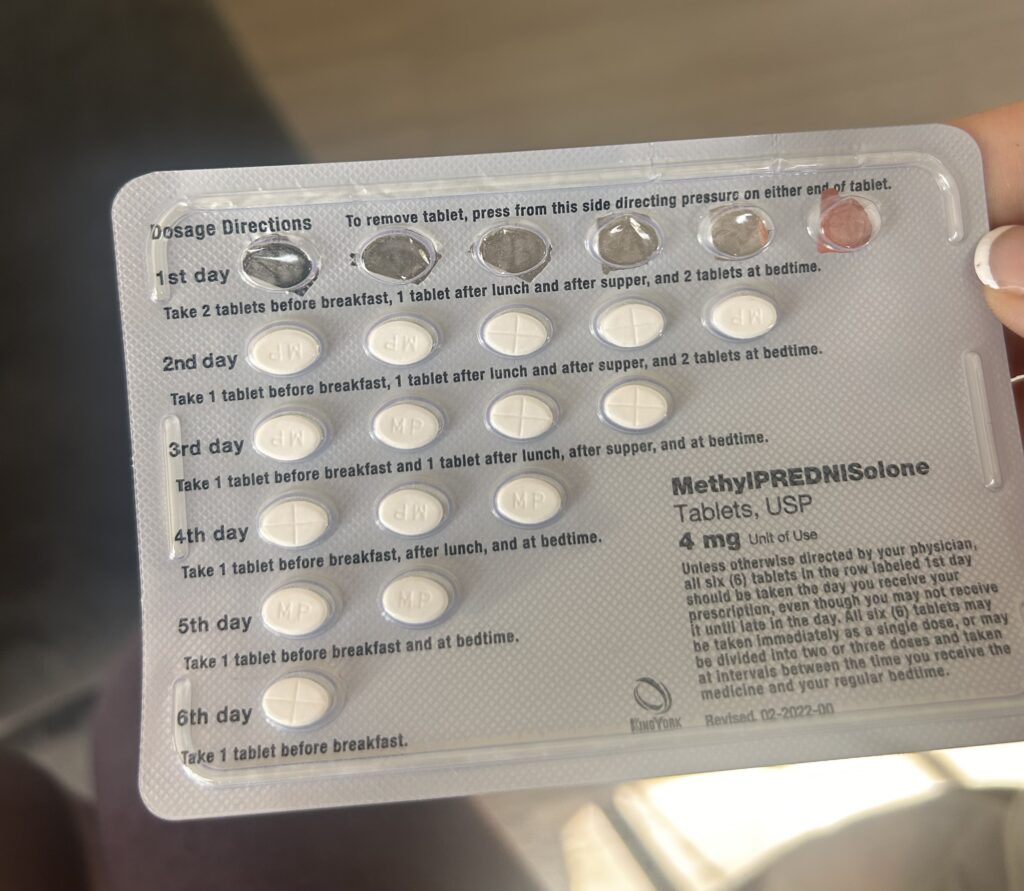
Within a couple of days, thanks to prednisone and a doctor who told me “43% of people have this condition” without making eye contact on a video, I could finally sit and stand (with assistance) without spasms.
But the time continued to be illuminating. I felt a profound love for everyone in my life. I began to make quiet vows to show up for others who might also be suffering—not in ways as visible or explainable as spasms, but in the ways we can’t always discern unless we’re perceptive.
Perhaps that’s the gift of pain: it reminds us to discern more. To pause and notice and be present.
Pain isolates us and forces us to be accepting even when we want to fight it, but it also has an unexpected power to connect us. To ourselves, to our bodies, and to others, if we let it.
When the pain eventually passes, whether it’s physical or emotional, we can only hope to hold onto the lessons.
Thoughts?